
The chair test
Picture a family that loves breakfast outside but avoids the same table by late afternoon. A cover over the whole terrace is one possible response, but it could also darken a window and consume the open view that made breakfast enjoyable. Before debating materials, move a chair on the plan—not on the roof.
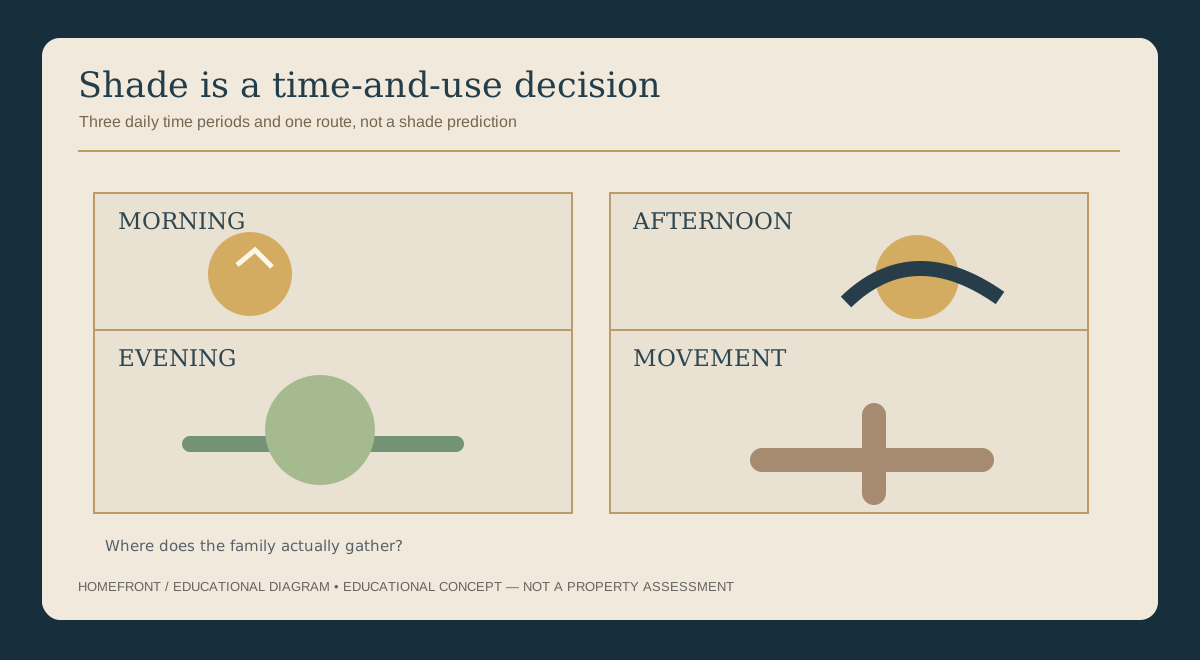
Choose one actual activity at a time: a quiet morning coffee, an after-school play period, a late lunch, or an evening gathering. Mark which spot currently works and the hour at which it stops working. This is a household preference exercise; it's not a solar survey or site design.
A daily-use map makes competing wishes visible
| Typical time | What is the household doing? | What could make the space better? | What should be protected? |
|---|---|---|---|
| Morning | Reading or eating breakfast | A comfortable seat with useful natural light | The view through the kitchen window |
| Midday | Children playing or a short outdoor meal | A practical retreat from excessive glare | Safe movement between house and yard |
| Late afternoon | Dining, conversation or tending plants | Seating where shade arrives when it's needed | Existing planting and room daylight |
| Evening | Hosting or ordinary household circulation | Lighting and access that remain intuitive | Quiet areas and neighbors' privacy |
The four squares of a useful yard
On paper divide the backyard into four jobs, not four construction zones: gathering, moving, growing and connecting to the house. A planned shade element influences more than one square. A large mature tree may support the gathering square while changing irrigation and access. A built cover may support shade but interact with a building's windows and drainage. A relocation of furniture may work without altering a structure.
The U.S. Department of Energy's energy-saver landscaping guidance discusses landscape shade as part of energy-conscious design. EPA WaterSense recommends matching plant choices and landscape use to local conditions. Neither source proves that a specific canopy, material or tree is correct for your yard.
Source notes: TB-DOE-SHADE, TB-EPA-LANDSCAPE
Three shade options and their hidden tradeoffs
| Subject | What to consider | What to ask |
|---|---|---|
| Keep the seating, add a built cover | Potentially keeps an established gathering location, but raises questions about daylight, structure and adjoining construction. | Which exact use matters, and who will verify property-specific details? |
| Create a planted gathering edge | A living canopy can change with time and will involve plant growth, watering and upkeep. | Who can evaluate mature form, water needs and any fire-sensitive placement? |
| Move the place where people gather | Can avoid part of a construction project but may lose convenience, privacy or accessibility. | Would a different path or seat position actually serve the same household routine? |
Source notes: TB-DOE-SHADE, TB-EPA-LANDSCAPE
Make one transparent decision card
This card is deliberately not a score for which product to buy. It helps a household recognize tradeoffs before requesting design advice.
Mark questions to bring to a conversation. This is not a safety score or inspection. Selections stay on this page and disappear when you leave.
A better brief is more valuable than a bigger canopy
A rendering can show an attractive patio and still miss how a family actually uses it. A time-of-day map lets the homeowner ask for a design that protects what they like while addressing the problem they came to solve.
For a solid-versus-lattice comparison, read HOMEFRONT's patio-cover planning guide. To record morning and afternoon exposure, the Compass Sun & Shade Explorer provides a separate orientation exercise.