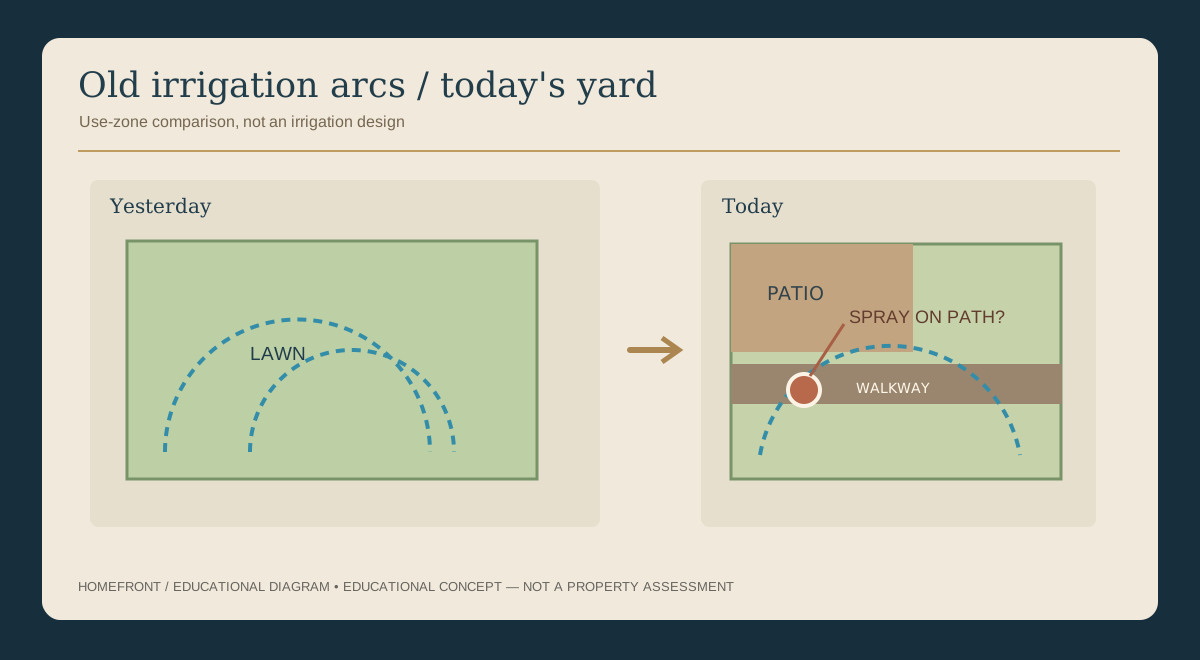

The sprinkler schedule remembers a yard that no longer exists
A lawn can become a table area, a tree can grow into a shade canopy, or a bed of thirsty annuals can become low-water planting. Yet the irrigation zones may still follow their original outline. The homeowner can often see the mismatch without claiming to know what is wrong underground.
EPA WaterSense calls its basic check Sprinkler Spruce-Up: inspect, connect, direct and select. It recommends checking for damaged heads, pooling, spray reaching pavement and schedules that no longer fit conditions. Some adjustments are ordinary homeowner maintenance; electrical, pressure or buried-system problems call for suitable professional assistance.
The reason to begin with a drawing instead of new equipment is simple: a replacement controller won't decide whether the grass is now a walkway.
Draw yesterday's spray onto today's yard
| Label on sketch | What changed? | What you actually see |
|---|---|---|
| Old lawn zone | Part of the lawn became a paved table area | Water reaches the paving rather than the remaining plants |
| Bed beneath a maturing tree | Shade and plant coverage are different now | Some planting looks consistently wetter or drier |
| Gate and side path | The route people take has shifted | Spray crosses a place where people move |
| Controller schedule | Daily routines and seasons have changed | The program repeats even when the weather and needs differ |
| Drainage edge | A paved or planted boundary was altered | Pooling or runoff appears away from the intended area |
Source notes: TB-EPA-WATER-SPRUC
A five-minute observation, not a repair manual
Make a paper map
Sketch the current yard as it is used now. Label seating, lawn, growing areas, doors and paths before drawing any irrigation equipment.
Inspect from normal safe access
EPA recommends checking for missing or damaged sprinkler heads. Note what is visible; do not excavate or open electrical housings to finish the map.
Observe coverage briefly if conditions permit
EPA WaterSense recommends matching watering zones to their plants, soil and sun or shade, and describes directing sprinkler spray away from buildings, sidewalks and driveways. Note observations only if it is safe and complies with current local watering rules.
Separate a schedule question from a hardware question
Write whether the observed issue concerns a seasonally unchanged timer, a spray pattern, an obvious damaged head or something that needs assessment.
Bring the sketch to someone qualified
Ask which existing zones can be adjusted, which parts need testing and which changes must coordinate with landscape or drainage work.
Source notes: TB-EPA-WATER-SPRUC, TB-EPA-WATERING
What WaterSense's four verbs mean to this particular yard
EPA WaterSense's Sprinkler Spruce-Up sets out four related checks: INSPECT heads for clogs, breaks or missing parts; CONNECT by checking where sprinkler heads meet pipes or hoses, since pooling can indicate a leak; DIRECT spray to planting rather than pavement or the house; and SELECT by updating seasonal schedules or considering WaterSense-labeled equipment such as weather-based controllers.
EPA's Watering Tips recommends scheduling each zone for its own plant type, soil conditions and sun or shade rather than giving every zone the same runtime. Neither source determines the cause of a wet spot or which equipment a particular property needs.
IEUA publishes conservation and rebate resources for its western San Bernardino County service area. For a possible incentive, check the household's actual retailer and the current administrator's rules rather than assuming a regional agency covers every Inland Empire address.
Source notes: TB-EPA-WATER-SPRUC, TB-IEUA-RETAIL, TB-EPA-WATERING
The map to bring into the next conversation
A useful decision file shows the current yard and what the person actually observed, without collecting private utility account details.
Mark questions to bring to a conversation. This is not a safety score or inspection. Selections stay on this page and disappear when you leave.
A yard that has a plan wastes fewer conversations
The point isn't to become a sprinkler technician. It's to show someone that a garden changed while the irrigation assumptions did not. The record is more valuable when it contains an actual sketch and a small number of precise observations than when it is packed with product brochures.
For comparing two planted areas with different exposure and water needs, the Compass Water-Wise Landscape Lab helps organize the household's observations on one page.