
Start with two records, not one conclusion
The window work has a written history. The drafty feeling has a present-day history. Put them beside each other, but do not turn “after” into “because of.” A date can show sequence; it cannot identify what caused a sensation or whether a particular item was in the earlier work.
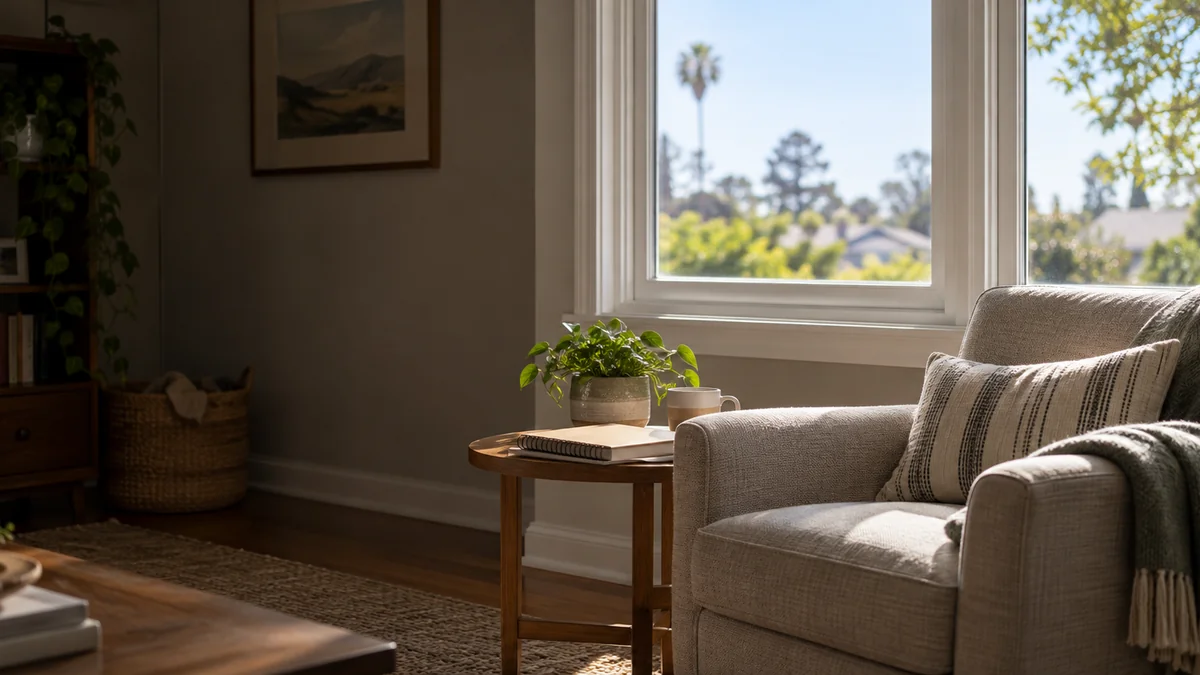
Choose one ordinary location, such as the chair beside the living-room window. Name the place and the time you noticed it. Keep the actual proposal and completion correspondence nearby rather than relying on a remembered summary.
Make the missing baseline visible
This invented example is a way to label evidence, not a record of a HOMEFRONT home. The most useful line may be the one the homeowner cannot fill in.
- Before the workUNKNOWN
No dated note describes how the chair felt before the window work. “I do not remember” is not evidence that the concern was absent.
- Earlier workDOCUMENTED
A saved proposal and completion message name the living-room window. Their wording is the record of stated scope, not proof of performance.
- TodayHOMEOWNER-REPORTED
On an ordinary evening, the homeowner writes that the chair beside that window feels drafty. The note identifies the experience, not an air path.
- Did it change?UNKNOWN
Without a comparable pre-work observation, the homeowner cannot say from this record whether the feeling is new, unchanged or worse.
What the sequence cannot prove The order of events does not establish a cause, fault or repair. Keep the change question open.
Send each question to the right conversation
Clarify the earlier scope
Ask the author of the written work description which location and items the document actually covered. Quote the relevant line; avoid assuming an omitted word meant completed work.
Describe the current concern
Share the location, date and ordinary-use note with an appropriate assessor. Ask what their proposed evaluation would cover, rather than requesting a preselected diagnosis.
Preserve the unanswered comparison
If there is no pre-work note, write “unknown baseline” in the record. A later explanation of today’s condition still may not tell you what changed during the earlier work.
A useful note does not require a home experiment
Write notes during normal use. Do not change systems, block openings, remove finishes or create smoke tests for this worksheet. A photograph can help someone find the place you mean, but it cannot establish the cause of the concern.
Keep subjective descriptions subjective. “The chair feels drafty this evening” says what the homeowner noticed. “This joint is defective” requires evidence this guide cannot provide.
Keep the follow-up traceable
The U.S. Department of Energy’s home assessment guide suggests listing drafty or uncomfortable rooms before an assessment. Use the record to explain the concern and ask what the proposed evaluation includes.
Record who answered each question and when. If an answer clarifies the prior scope but not today’s condition, keep the second question open. For a whole-room temperature pattern, use the related room-comparison guide; for future window proposals, use the window-scope guide.
Source notes: AP2-DOE