
Start with what you can say first-hand
A desk that looks dusty and a room that feels stuffy may happen in the same space. That does not show they share a cause. Write each in a separate line before asking anyone to evaluate the room.
For each line, note an ordinary place, when you noticed it and what you were doing. Leave the material, mechanism and health significance unnamed unless someone with an appropriate scope establishes them. A photograph can help identify a location; it cannot establish what the material is.
A fictional handoff: one room, two questions
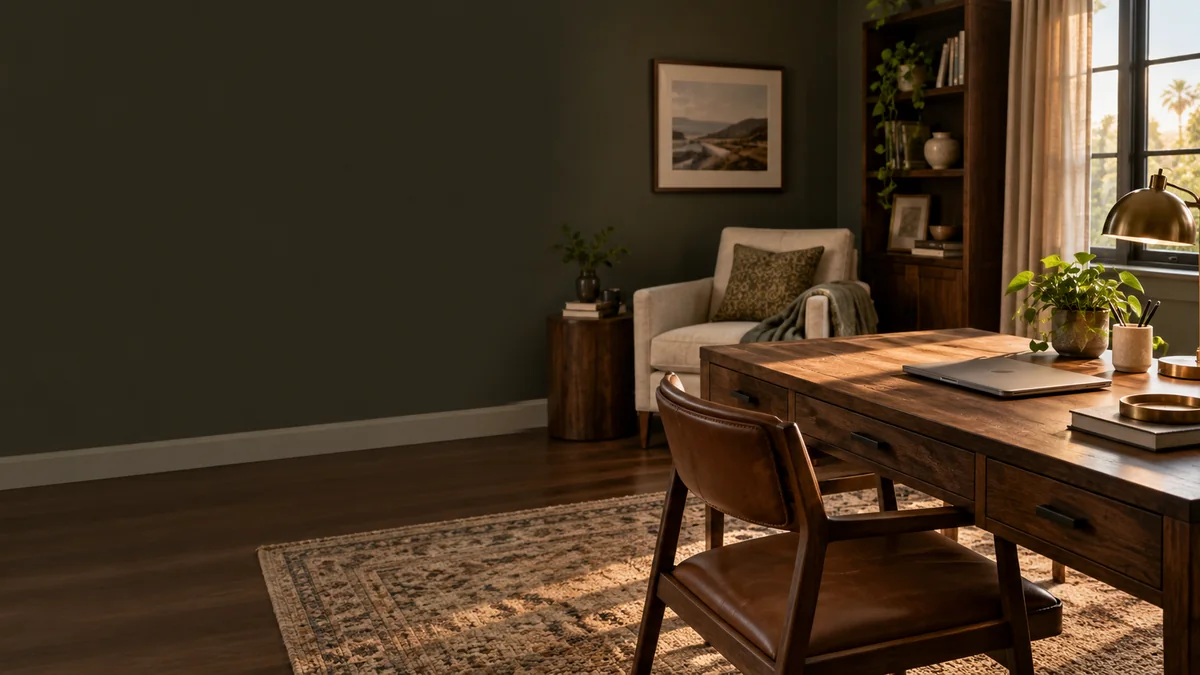
Imagine a household using the same den on different days. The entries below are invented to show how a conversation can split; they are not HOMEFRONT observations or test results.
01 · Visible desk condition
- Homeowner observation
- The desk looked dusty on Monday morning and again on Thursday evening. No one recorded when the material settled.
- Still unknown
- What the visible material is, when it appeared and where it came from.
- Scope question
- Does the proposed evaluation include identifying this visible material or its source? If not, who should address that question?
02 · Room comfort
- Homeowner observation
- The den felt stuffy during reading on two evenings. The household did not measure conditions or compare other rooms.
- Still unknown
- Whether the sensation has any relationship to the desk observation, or what explains it.
- Scope question
- Does the proposed evaluation include this room-comfort concern, and how would any finding be documented?
A partial answer is not a shared answer. Suppose the person consulted says they can discuss the comfort concern but cannot identify the desk material. Record “comfort conversation in scope” and “desk-material question unanswered.” Do not rewrite either as a diagnosis or combine them into one finding.
Keep the notes within their real limits
The handoff is a record of ordinary experience, not a sampling plan, health assessment, indoor-air rating or heating-and-cooling diagnosis. It does not ask you to open equipment, enter concealed spaces, change how the system runs or perform a home test.
If a later document gives a finding, preserve its author, date and scope. Keep your original observation separately. A scoped answer to one question does not answer the other by implication.
Ask what the proposed conversation can answer
The U.S. Department of Energy suggests listing uncomfortable or drafty rooms before a home energy assessment. That supports preparing a clear room description. It does not mean an energy assessment can identify a desk material or answer every comfort question.
Send or bring the two plain-language entries separately. Ask what information the person needs, which question is within their proposed scope, what document you would receive, and who may address anything outside that scope.
Source notes: AP2-DOE
Close only the question that actually received an answer
Was a concern accepted for evaluation?
Record which concern, by whom, and in what stated scope. A general conversation is not itself a finding.
What was documented?
Keep the actual written finding with its author and date. Do not translate a comfort observation into a material or health conclusion.
What remains open?
Carry the unanswered line forward. Use the separate room-pattern guide for comparisons between rooms, and the post-window guide for questions tied to a documented work sequence.