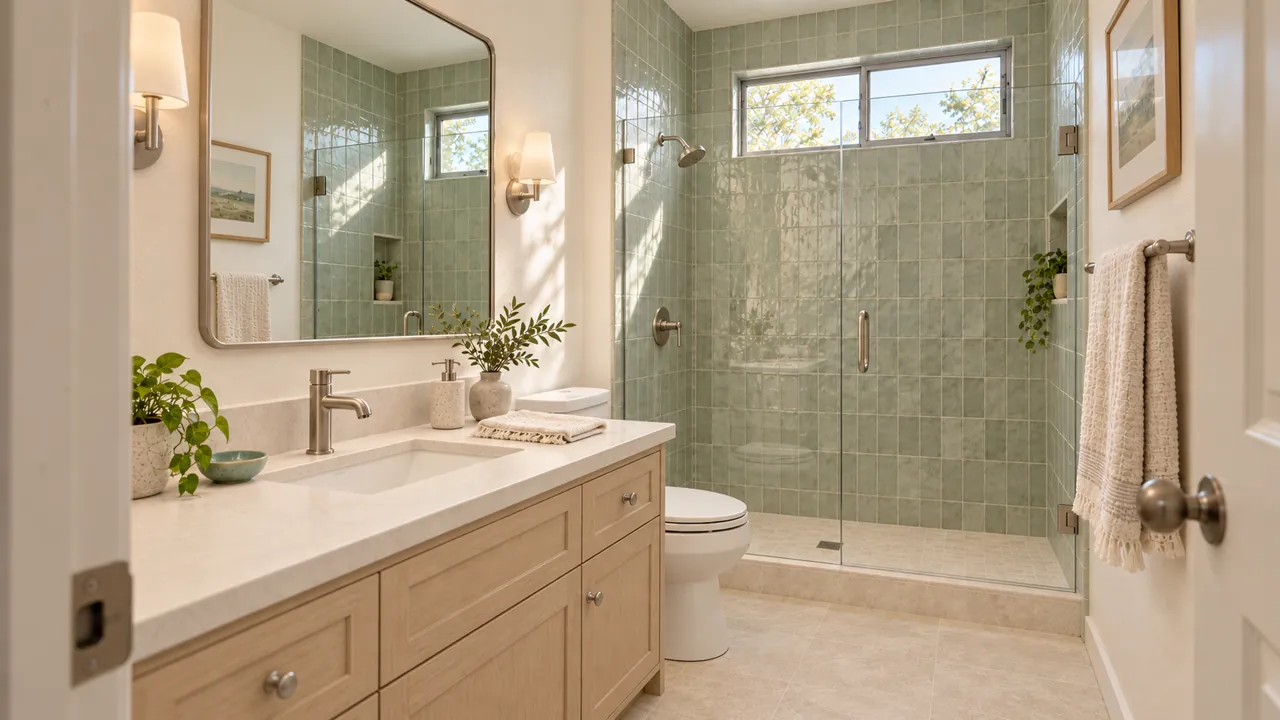

What do you want to work differently?
A bathroom refresh and a full remodel can mean different things in different proposals. Start with the changes you want, then ask what each option actually includes. A label is not a work description.
Write down what bothers you during an ordinary day: a finish you dislike, storage that does not fit your belongings, or a room arrangement you want to discuss. Keep household preferences separate from a professional's findings about the home. This comparison organizes a conversation; it does not establish whether a proposed alteration is suitable.
Compare three descriptions of change
| Subject | What to consider | What to ask |
|---|---|---|
| Appearance-focused | List the specific surfaces or visible items you would like changed. Keep a separate list of things you want retained. | Does the written option address only appearance, or does it include other work? |
| Selected-item changes | Name each fixture, cabinet or other item being considered; do not assume that everything nearby is included. | What surrounding work does the proposal describe, and what does it leave unresolved? |
| Room-wide changes | Record proposed changes to the arrangement and the features you want preserved. | Which parts of the concept have been assessed, and which remain assumptions? |
Give both options the same household brief
Imagine a household that wants less counter clutter and dislikes the current finish. One proposed option changes the visible finish. Another changes storage as well. Comparing those options only by their labels would miss the household's storage request. Put that request beside both descriptions and ask how each answers it.
This is a hypothetical planning example, a starting point for planning. It does not imply a price difference, schedule, resale result or appropriate construction method. The useful question is whether each option addresses the same stated need.
Build a short comparison record
What changes and what stays?
Name the items in ordinary language. If you cannot tell from the document, mark the answer unknown rather than treating silence as an inclusion.
What needs another answer?
Keep design questions, product selections and proposed work descriptions in separate rows. Identify who is expected to resolve each open item.
How will the household plan around it?
Ask for the actual proposed sequence and access arrangements. Record what has been discussed without inventing a duration or deciding whether occupancy is safe.
Which version are you comparing?
Write the date and version beside each option. A later document may change the scope while keeping the same project name.
Keep unresolved selections visible before discussing a start
Once an option is taking shape, list the decisions still needed to describe it. Separate a household preference from a product selection and from a question that needs the person responsible for the proposed work. A selection board can make the next conversation specific without turning it into a clearance checklist.
A bathroom selection-dependency board
| Open decision | What the household can supply | What still needs an answer |
|---|---|---|
| Retain or replace an item | The item you want to keep and the outcome you want from the update | Who will confirm how that choice is reflected in the proposed scope? |
| Choose the actual product | The preferred product reference or a clearly marked shortlist | Which selection details does the proposal still depend on? |
| Choose the visible finish | A named sample or reference and the person making the preference decision | Does the current written version reflect that selection? |
| Arrange bathroom access | Your household needs and any confirmed alternative arrangement | Who will confirm proposed unavailable periods and communicate changes? |
| Resolve an unclear responsibility | The unanswered question and the person you have asked | Is a response recorded, or is this still an assumption? |
Use the board to ask, not to authorize work
Label each item proposed, awaiting an answer or reflected in the current document. If one choice changes another, keep that connection beside it. The board organizes open questions; it is not a complete pre-demolition checklist or a finding that work can begin.
The one-bathroom planning guide expands the household-access question. The handover-file guide shows which product information is useful to retain after selections have been supplied.
Carry the decision into a written scope
CSLB's homeowner checklist asks whether work, materials and equipment are described in detail. Use that as a prompt to make the selected option understandable in writing; this worksheet is not a contract review.
Keep the comparison with your home records. If the main unresolved question is how your household uses a tub or shower, continue with the bathing-preferences guide. If the concept is still broad, Home Intelligence can help you organize the priorities before asking about work.
Source notes: AP2-CSLB